
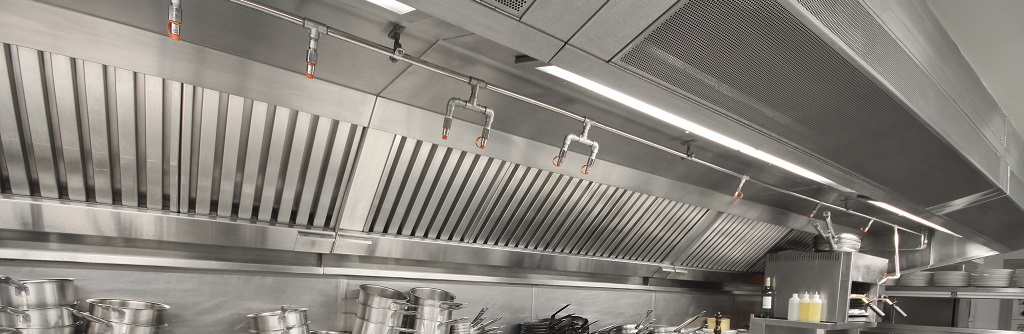
If your approach to kitchen canopy cleaning isn’t militant, consider this:
70% of fires in commercial kitchens are caused by fat and grease build up and faulty ventilation. In other words, inefficient kitchen canopy cleaning means that you’re very likely to end up playing with fire – literally. Because this task is such an undertaking, it’s often overlooked, with dire consequences. Besides the risk of fire, careless kitchen canopy cleaning results in poor extraction, jeopardising the health of staff and patrons. Failure to adequately clean your kitchen canopy also results in the overflowing of the drip tray – causing an unsightly mess and compromised standards of hygiene.
Avoiding a potentially hazardous situation relies on regular kitchen canopy cleaning.
The frequency of cleaning depends on a few variables such as the type of food you’re cooking, and the frequency of use. The general rule of thumb is that the filter and drip tray should be cleaned daily. Neglecting to do this results in fatty build up – making this task extremely difficult. Making this a daily non-negotiable task in your kitchen not only reduces the risk of a fire, it ensures that your extractor works at its optimal capacity, for longer.
Avoid any occupational health and safety issues by outsourcing your kitchen canopy cleaning.
Many restaurateurs assign the cleaning of the actual canopy to their staff, unaware that they’re taking a major risk. Kitchen staff aren’t trained to clean kitchen canopies, they’re trained to cook. If one of your employees falls or injures themselves while attempting to clean your hood, you’ll be held liable. Keeping your staff safe is your responsibility, as is maintaining a safe and hygienic working environment. While the cleaning of the filter and drip day can be done in-house, the rest of the kitchen canopy should be cleaned by a specialist.
Make sure you’re hiring a reputable service provider in order to ensure your kitchen is hazardous-free.
Many so-called cleaning experts are little more than kitchen cowboys. They lack the skills, expertise and experience needed to perform this intricate task. Make sure the company you’re hiring has extensive industry experience, as well as the necessary training certifications NCCA, COID-Letter of Good Standing, All work done to SANS 1853/ SABS 1853:2001 Standards. Employing expert kitchen canopy cleaning services is paramount – we have years of experience under our belt (36 to be exact). If you’d like to find out more about how we can assist with your restaurant cleaning needs, give us a call or send us an email. We’d be happy to help!
[hs_action id=”1098″]
Image Credit: DPL Ventilation