
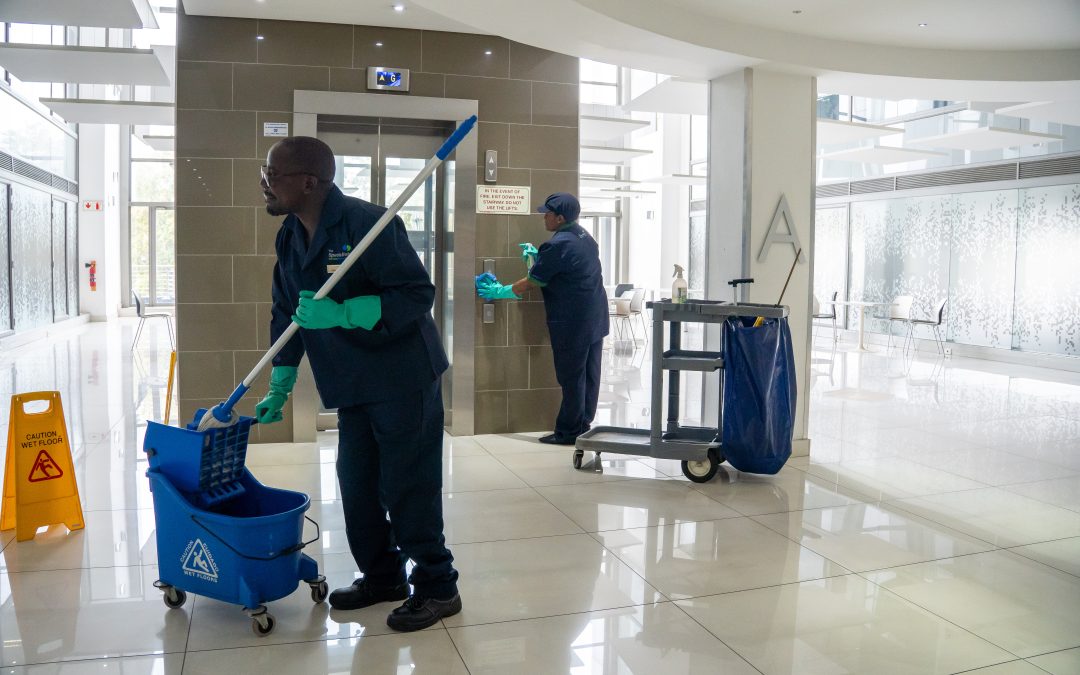
commercial space can look spotless and still have hygiene risks hiding in plain sight.
Freshly mopped floors, polished surfaces and an organised workspace create the impression of cleanliness. But what looks clean is not necessarily hygienic. Microorganisms, allergens and other contaminants can remain on high-touch surfaces, in difficult-to-reach areas and where routine cleaning simply doesn’t go far enough.
For businesses, that distinction matters.
A Clean Appearance Is Only the Starting Point
Visible dirt is easy to identify. Hidden contamination isn’t.
Door handles, light switches, handrails, shared equipment, taps and other frequently touched surfaces can be exposed to constant contact throughout the day. Meanwhile, areas behind equipment, underneath fixtures and in corners can accumulate dirt and organic matter without being immediately noticed.
This is why commercial cleaning should not be based solely on appearance.
A space can look clean while still falling short of the hygiene standard it needs to meet.
Different Spaces Have Different Hygiene Risks
There is no universal cleaning routine that works equally well everywhere.
A healthcare environment has different hygiene requirements from a restaurant. A food processing facility has different risks from an office. A washroom has different cleaning priorities from a reception area.
Effective cleaning starts with understanding the environment, its risks and the people who use it.
The right cleaning programme should consider factors such as:
- The type of environment
- Levels of foot traffic and occupancy
- High-touch areas
- Potential contamination risks
- Cleaning frequencies
- Appropriate products and methods
- Required hygiene and compliance standards
Cleaning Needs to Be Consistent and Traceable
A professional cleaning programme isn’t simply about having someone clean a space every day.
It is about having defined processes that can be followed, monitored and verified.
Schedules, procedures, records and quality checks create accountability. They help businesses know what has been cleaned, when it was cleaned and whether the required standard was achieved.
This becomes particularly important in environments where hygiene and compliance are closely linked.
When Hygiene Fails, Business Can Feel the Impact
Poor hygiene can affect more than the appearance of a workplace.
It can contribute to illness, disrupt operations, affect employee wellbeing and undermine customer confidence. For businesses operating under strict health, safety or hygiene requirements, inadequate cleaning processes can also create compliance concerns.
And reputation matters.
Customers and employees may not know exactly how a facility is cleaned, but they notice when an environment feels clean, cared for and safe or when it doesn’t.
Look Beyond the Shine
True commercial hygiene is not about creating a temporary impression of cleanliness.
It is about putting the right people, processes, products and controls in place to maintain a hygienic environment consistently.
Since 1978, The Specialists have provided commercial cleaning and hygiene solutions across Southern Africa. As the Cleaning & Hygiene Specialists, we understand that effective cleaning requires more than making surfaces shine.
It requires an approach built around safety, consistency, accountability and the specific requirements of each environment.
Because when it comes to commercial hygiene, clean should be more than something you can see. It should be something you can trust.