
A hotter-than-normal summer could change pest activity around your home. Here’s what Southern African homeowners should know and how to prepare.
Southern Africa is heading into the 2026/27 summer with a strong weather pattern to watch.
The South African Weather Service (SAWS), Botswana Department of Meteorological Services (DMS), and Namibia Meteorological Service have forecast above-normal temperatures and below-normal rainfall across much of the countries for the coming summer months. They have also warned that the developing El Niño is likely to influence the 2026/27 summer season, although conditions will vary from region to region.
So, what could this mean for household pests?
It could mean changes in where pests move, where they seek food and water, and how active they become.
Why does hotter weather affect pests?
Temperature influences the development, movement and activity of many insects.
Warmer conditions can increase activity and, when food, water and shelter are readily available, some pests may reproduce more quickly. Hot or dry conditions can also encourage pests to seek out sheltered environments where they can find what they need.
And your home can provide all three:
Food. Water. Shelter.
That can bring pests closer to your living spaces.
Common household pests to watch for during summer include:
🪳 Cockroaches
🐜 Ants
🦟 Mosquitoes
🪰 Flies
🐀 Rats and mice
🕷️ Spiders
Not every pest responds to heat in the same way, so a hotter summer does not automatically mean every pest population will increase. Local conditions, pest species and access to food, water and shelter all play a role.
What could be attracting pests to your home?
Sometimes, the problem is not the weather alone.
A warmer, drier season can make your property more attractive when there are easy sources of food, water or shelter available.
Look around your home for:
- Leaking taps or pipes
- Standing water
- Food crumbs and spills
- Pet food left out
- Unsealed bins
- Overgrown vegetation
- Clutter in garages and storerooms
- Gaps around doors, windows and pipes
These may seem like small issues, but together they can create ideal conditions for pests.
Cockroaches can become a food hygiene concern:
Cockroaches are particularly concerning in kitchens because they can move through contaminated areas such as bins, drains and bathrooms before coming into contact with food, utensils and food-preparation surfaces.
That means a cockroach problem is about more than an unpleasant sight.
It can also become a food hygiene concern.
Keep food sealed, clean spills and crumbs promptly, manage household waste properly and pay attention to repeated sightings.
Mosquitoes need very little water:
Mosquitoes can breed in relatively small amounts of standing water.
Check plant saucers, buckets, gutters, containers, pool covers and anything else around the property that can collect water.
Even during a drier season, water that remains around your property can create opportunities for mosquito breeding.
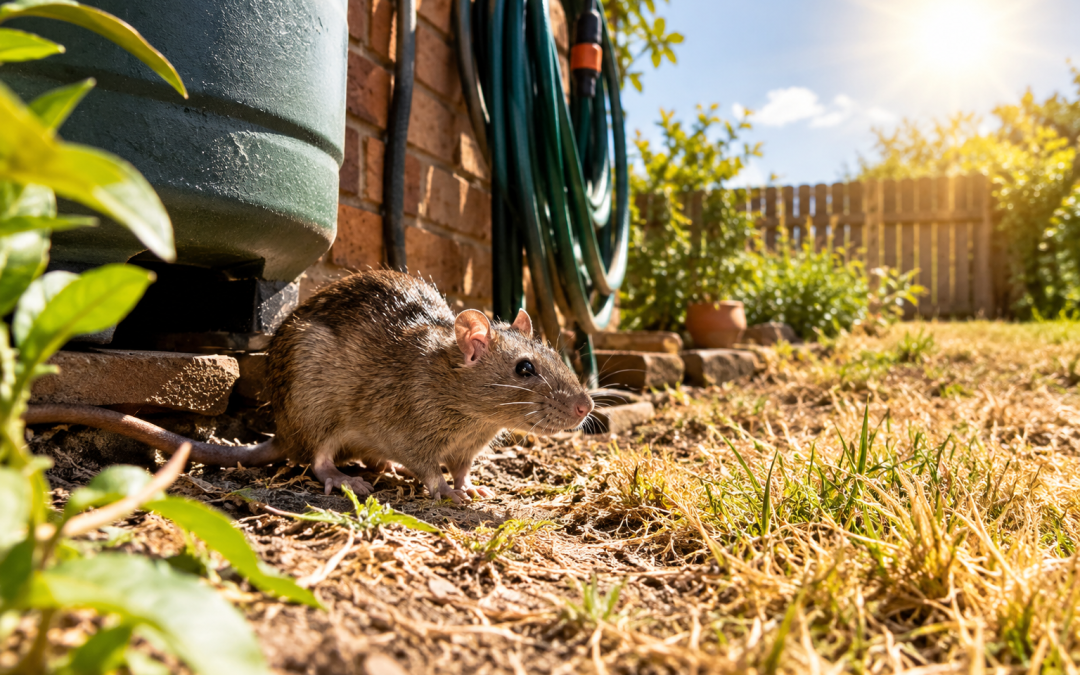
Don’t overlook rodents:
Rats and mice are also looking for food, water and shelter.
Pet food, bird seed, household waste and poorly stored food can provide easy sources of nutrition, while clutter and gaps around buildings can provide hiding places and entry points.
A single sighting does not necessarily mean there is a large infestation, but repeated activity should not be ignored.
Look for droppings, gnaw marks, damaged packaging, nesting material or scratching sounds.
What can homeowners do?
You cannot control the weather, but you can control how attractive your property is to pests.
Start with the basics:
Store food securely. Keep dry goods in sealed containers and clean up crumbs and spills.
Remove standing water. Empty containers, check gutters and address leaking taps or pipes.
Manage waste. Keep bins closed and avoid allowing food waste to accumulate.
Seal entry points. Check gaps around doors, windows, pipes and other access points.
Reduce harbourage. Keep garages, storerooms and outdoor areas tidy and limit unnecessary clutter.
Watch for early warning signs. Droppings, pest trails, nests, damaged food packaging and repeated sightings all deserve attention.
When should you call a pest control professional?
Pest control should not only happen once an infestation has become severe.
If you are repeatedly seeing pests, finding signs of activity or cannot identify what is attracting them, a professional assessment can help identify entry points, harbourage areas, moisture sources and other conditions contributing to the problem.
Professional residential pest control can then be tailored to the pest and the property, rather than simply treating the insects or rodents you can see.
Get your home ready for summer pests:
The 2026/27 summer is expected to bring warmer and drier conditions to much of South Africa, according to the latest SAWS outlook.
That does not guarantee a pest infestation.
But it is a good reason to look at the conditions around your home before pest activity becomes a bigger problem.
Keep food protected. Remove water sources. Close entry points. Reduce hiding places. And act early when you notice signs of activity.
A hotter summer may change pest behaviour.
Make sure your home is ready for it.
For professional residential pest control in Southern Africa, contact The Specialists HERE